How to catch a skittish or shy lost dog
A frightened lost dog may run from everyone, including its owner. Chasing and calling push the dog farther away.
This guide sets out the low-pressure approach used by lost-pet recovery groups. It covers calming signals, feeding stations, a sightings log, and humane traps.
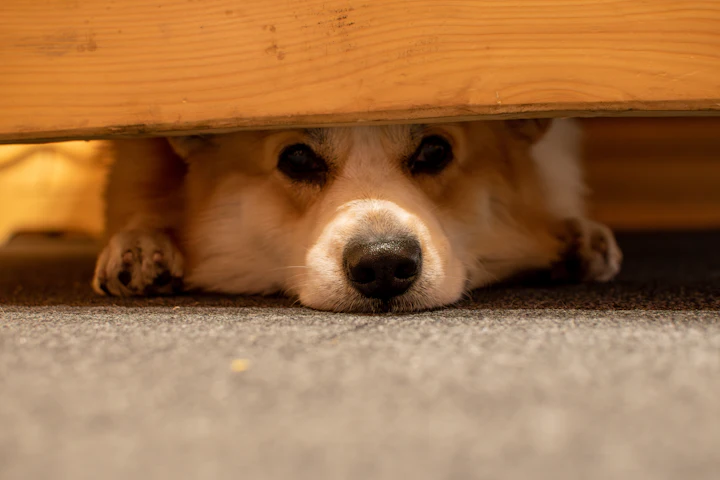
Why a frightened dog runs from its own family
Lost Dogs of America calls this state survival mode. The dog focuses on finding food, water, and shelter, and runs or hides from anything it reads as a threat.
A dog in survival mode may not recognize its owner. Missing Animal Response Network (MARN) notes that even dogs that are not fearful at home can become terrified once lost.
Calling makes it worse. Other people have likely already tried to capture the dog, MARN explains. Being called then becomes a trigger to bolt, even when the owner calls.
What not to do
- Do not chase. The American Kennel Club (AKC) says chasing triggers a flight response.
- Do not call, whistle, clap, or slap your legs. MARN warns that each can be a trigger.
- Do not stare or walk straight at the dog. MARN describes this as frightening to a dog in fight-or-flight mode.
- Do not crowd. Lost Dogs of America advises against a large group at a sighting location.
The calming-signals approach, step by step
Calming signals are body-language cues that show a dog you are not a threat.
- Stop moving. The AKC advises turning sideways to the dog.
- Sit down on the ground. MARN also describes lying flat on your back.
- Look away. MARN suggests watching the dog out of the corner of your eye.
- Stay quiet or speak softly. MARN suggests singing, because it sounds different from calling.
- Pretend to eat. Crinkle a chip bag, smack your lips, and drop smelly treats such as pieces of hot dog.
- Toss treats nearby without approaching. Let the dog come to you.
- Wait. Lost Dogs of America notes it may take minutes or hours. The dog may circle and approach from behind.
- Move slowly to clip on the leash. Sudden moves can send the dog running again.
MARN notes that a panicked dog full of adrenaline may refuse food. If the dog moves off, do not follow. Set up a feeding station where it was seen.
MARN features this training video on its “Don't Call Your Dog!” page: Unit#4 Calming Signals Panicked Dogs.
Set up a food and scent station
A feeding station gives your dog a reason to stay in one area. Humane World for Animals advises placing food and water in a safe spot your dog is known to visit.
- Use strong-smelling food such as canned Vienna sausages, hot dogs, or rotisserie chicken. Lost Dogs of America notes that dry dog food lacks enough odor.
- Add a bowl of water and a piece of your clothing for scent.
- Turn a large plastic storage container on its side to keep rain off the food.
- Keep the station going. Lost Dogs of America warns against abandoning it after a day or two.
- Add a motion-activated camera to confirm your dog is eating there, and at what time.
- Keep the station well away from roads.
Keep a sightings log and post flyers
Sightings show you where to place the station. Lost Dogs of America recommends a dedicated sighting journal and a map. For each call, record:
- The exact location, with street names and landmarks
- The date and time
- What the dog was doing and which direction it was heading
- The caller's name and phone number
The AKC notes that patterns in these reports often help narrow the search area. Lost Dogs of America advises never disclosing a sighting location publicly, including on social media.
Humane World for Animals recommends large, colorful posters. Pet FBI suggests the words “SHY LOST DOG” and “DO NOT CHASE.” The AKC advises a large, clear photo and your phone number.
When and how to use a humane trap
Consider a trap only once your dog comes reliably to the feeding station. Humane World for Animals and Lost Dogs of America both set that condition.
- Check local, county, and state laws first. Trapping may not be legal in your area.
- Get the property owner's permission, as Pet FBI advises.
- Choose a trap your dog can stand up and turn around in.
- Secure the door open until the dog is comfortable in the trap, then set it.
- Check the trap several times a day, and quickly release any other animal.
- Do not trap in extreme heat or cold.
| Who can help | What they do | Source |
|---|---|---|
| Animal control agencies and rescue groups | Most animal control agencies and many rescue groups have a trap you can borrow. | Humane World for Animals |
| MARN-trained pet detectives | Volunteers and businesses that completed MARN field training. Some offer tracking dogs or help catching shy, hard-to-trap animals. Some charge for their services. | MARN directory |
| AKC Reunite | If your dog is registered with AKC Reunite, call the Reunite Helpline at 800-252-7894 to report your dog lost. | American Kennel Club |
| HomeAgain | If your dog's microchip is enrolled with HomeAgain, call 1-888-HOMEAGAIN (1-888-466-3242). Lost Pet Specialists are on call all day, every day. | Merck Animal Health |
Stay safe near roads
In a guest post for Pet FBI, Lost Dogs of America names the greatest risk to a shy lost dog: being chased into traffic.
- Post signs at intersections to alert passing drivers to your missing dog.
- Stress “DO NOT CHASE” on every flyer and sign.
- Place food and scent items well away from roadways.
After capture: secure your dog and see a veterinarian
- Do not take your dog out of the trap. Lost Dogs of America advises moving the whole trap to a secure location, preferably a veterinary clinic.
- Wear gloves. Lost Dogs of America warns that a dog in survival mode may not recognize you and may bite.
- Use two points of attachment. The Connecticut Humane Society recommends a martingale collar plus a harness, on a non-retractable leash.
- Book a veterinary exam. The AKC advises one if your dog was missing overnight or longer, even with no visible injuries.
- Check the ID tag and microchip registration. The ASPCA notes a microchip is only as good as the contact details on file.
Questions
Why does my lost dog run away from me?
A lost dog in survival mode runs or hides from perceived threats and may not recognize its owner. Lost Dogs of America describes increased alertness and hyper-vigilance. Sit down, look away, and let the dog approach you.
Should I call my lost dog's name?
Not if the dog is frightened. Missing Animal Response Network explains that calling can become a trigger that makes a panicked dog bolt. Stay quiet or speak softly, sit down, and drop smelly treats around you.
What food works for luring a scared dog?
Use food with a strong smell. Lost Dogs of America lists canned Vienna sausages, hot dogs, and rotisserie chicken. It advises against dry dog food and raw meat, which lack enough odor.
When should I use a humane trap for a lost dog?
Use a trap once your dog visits the feeding station and you know what time it shows up. Check local laws, get the property owner's permission, and check the trap several times a day.
How long does it take to catch a shy lost dog?
It varies. Lost Dogs of America notes a trap may catch the dog in an hour. It may also take days, weeks, or months. Keep the feeding station going and keep logging sightings.
Sources
- Don't Call Your Dog! – Missing Animal Response Network
- Lost Dog Behavior – Missing Animal Response Network
- MARN Directory – Missing Animal Response Network
- Do NOT Call a Loose / Stray Dog! – Missing Animal Response Network founder's newsletter (Substack)
- Unit#4 Calming Signals Panicked Dogs (video) – pethunters on YouTube
- What Does Survival Mode Mean? – Lost Dogs of America
- “I Got A Sighting! Now What…?” Part 5 in a Series – Lost Dogs of America
- Use a Feeding Station to Help Capture a Shy Lost Dog – Part 6 in a Series – Lost Dogs of America
- Humane Trapping, Before You Begin – Part 9 in a Series – Lost Dogs of America
- Choose the Right Humane Trap for the Job! – Part 10 in a Series – Lost Dogs of America
- Keep Your Traps Bungeed Open Until the Lost Dog Is Comfortable – Lost Dogs of America
- Checking the Trap – Part 15 in a Series – Lost Dogs of America
- Tips for Newly Adopted or Foster Dogs Lost from Their New Home – Lost Dogs of America, guest post on Pet FBI
- Advice on Trapping a Runaway Dog – Pet FBI
- How to Find a Lost Dog – Humane World for Animals
- What to Do When Your Dog Is Lost: The First 48 Hours – American Kennel Club
- Finding a Lost Pet – ASPCA
- HomeAgain – Merck Animal Health USA
- Keeping Your Flight Risk Safe – Connecticut Humane Society