Dog boots and paw protection: how to choose and fit
Dog boots protect paws from hot pavement, ice, road salt and rough ground. Dogs do not need them on every walk, and a boot only helps when it fits and stays on.
This guide covers when paw protection helps, which type suits which job, and how to measure and introduce boots. Not a substitute for professional veterinary help.
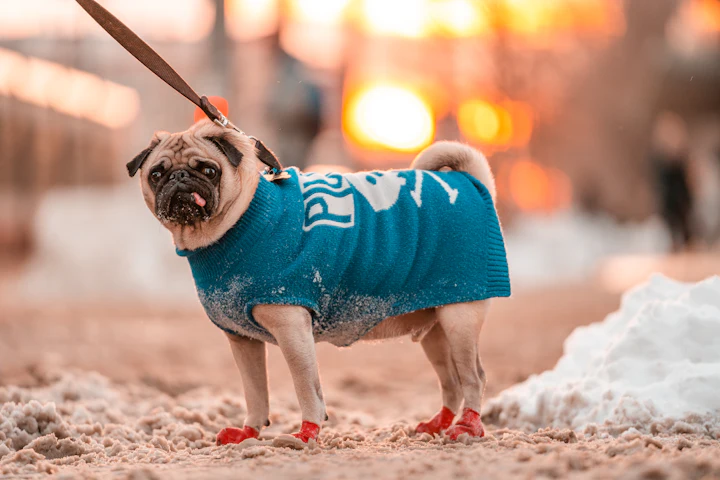
When dogs need paw protection
The American Kennel Club (AKC) gives a general rule of thumb. If you would not walk barefoot on a surface, your dog should not either.
- Hot pavement. When the air temperature is 86°F (30°C), asphalt registers 135°F (57°C), the AKC reports. Place your hand on the pavement for 10 seconds. If it is too hot for your hand, it is too hot for paws.
- Ice, snow and de-icers. PetMD says paws should be protected with boots at or below freezing (32°F / 0°C). Ice and snow can get trapped between the paw pads and cause wounds. Many ice-melt products can dry out, crack or even burn paw pads, Preventive Vet notes. Dogs can also swallow ice melt when they lick their feet, the ASPCA warns.
- Rough terrain. Rocks and rough terrain can be painful, Small Door Veterinary notes. Boots also reduce the risk of severed nails on uneven terrain, slopes and slippery rocks, the AKC says.
- Injuries and allergies. Cuts and scrapes heal best when kept clean and dry, according to Small Door Veterinary. Boots also help protect paws from contact irritation from grass and weeds.
- Senior dogs indoors. All-season boots, grippy socks or toenail grips can give senior dogs extra traction on slippery surfaces, the AKC says.
When boots are not needed – and the risks
Dogs' paw pads are generally tough, and dogs do not necessarily need boots, Small Door Veterinary notes.
Boots carry their own risks. Dogs release some heat through sweat glands in their paw pads, though panting does most of the cooling. For summer, PetMD recommends lightweight boots in breathable fabric. Small Door Veterinary cautions against leaving boots on too long, so your dog does not overheat.
Excess moisture between the toe pads raises the likelihood of yeast infections, the AKC notes. Boots left on too long can also cause painful pressure sores, PetMD warns. Take them off once you are indoors.
Types of dog boots and what each is for
- Rubber-soled all-terrain boots: grooved, anti-slip soles add traction on uneven pavement and rocky terrain. The AKC also suggests all-terrain boots for hot pavement.
- Grippy socks and indoor traction boots: extra traction on hardwood floors for senior dogs. Outdoors, socks can work for short walks but do not stay in place for long.
- Rubber boots and disposable rubber coverings: protection in rain and slush and from salt and de-icers. Rubber is not breathable, so keep wear short.
- Insulated winter boots: waterproof, nonslip boots with an insulating lining for snow, ice and freezing temperatures.
- Medical boots: a waterproof boot keeps a bandaged paw dry outdoors, if your veterinarian approves. Remove it as soon as you are back indoors.
Paw wax as an alternative
Paw balm or wax forms a protective barrier against dampness and chemicals. It also keeps snow from clumping between the pads and toes. PetMD advises a thin layer on the pads and between the toes. The ASPCA suggests massaging petroleum jelly or another vet-approved paw protectant into the pads before going outside.
Wax has limits. It will not protect paws from sharp ice, PetMD notes. It also may not protect against thermal burns on the hottest days. Moisturizing pads that are already soft can leave them more prone to tearing on rough or wet surfaces, Preventive Vet notes.
How to measure your dog's paws
Measure with your dog standing, so the paw bears weight. These steps follow one manufacturer's measuring guide.
- Gather a pen, a sheet of paper and a ruler or tape measure.
- With your dog standing, place the paper under one front paw.
- Lift the opposite front paw so the paw on the paper bears your dog's weight.
- Hold the pen straight up and down and mark the widest part of the paw on each side.
- Measure the distance between the two marks.
- Repeat on a rear paw. Rear paws are commonly smaller than front paws.
- Match your numbers to the sizing chart for the specific boot. Some charts ask for length from the heel to the tip of the longest toenail instead of width.
Follow the chart for the boot you choose, including its advice for in-between measurements.
Boots should be comfortable, not too tight, and stay on, Small Door Veterinary advises. To check the fit, fasten the boot and tug the end of it. One maker's fitting guide says a boot that shifts down may be too large or fastened too loosely.
Break-in and training steps
With patience and rewards, most dogs adapt to boots, the AKC says. These steps follow AKC training guidance.
- If your dog dislikes having their feet handled, work on that before you bring out the boots.
- Put the boots on the floor and let your dog explore them. Reward sniffing and other signs of interest.
- Gently put one boot on, reward your dog, then take the boot off right away.
- Repeat, leaving the boot on a little longer each time and rewarding often.
- When your dog wears one boot comfortably, add a second. Build up to all four.
- If your dog tries to take a boot off, shorten the time you ask them to wear it.
- When your dog is comfortable in all four boots at home, head out for a short walk with treats and praise.
High-stepping and paw-shaking the first time in boots is a natural reaction, one manufacturer's break-in guide notes. During the break-in period, stop on each outing to check for rubbing, hot spots and strap tension.
Care, inspection and when to call your veterinarian
- Take boots off once you are inside, so your dog does not get uncomfortably warm or lick chemicals off them.
- After walks, check for cuts, scrapes, cracked pads and redness between the toes.
- After winter walks, wash and dry your dog's feet to remove ice, salt and chemicals. Dry between the toes well.
Find dog boots on Chewy Find dog boots on Amazon
Questions
Do dogs really need boots?
Not on every walk. Small Door Veterinary notes that paw pads are generally tough. Boots help on hot pavement, ice, salted sidewalks and rough terrain, and with some injuries, allergies and traction problems.
How hot is too hot for a dog's paws?
The AKC reports asphalt registers 135°F (57°C) when the air is 86°F (30°C). Place your hand on the pavement for 10 seconds. If it is too hot for your hand, it is too hot for your dog's paws.
How long can a dog wear boots?
Take boots off once you are inside. PetMD warns that boots left on too long can cause painful pressure sores, and your dog can get uncomfortably warm.
Can paw wax replace dog boots?
Paw wax forms a barrier against dampness, salt and chemicals. PetMD cautions that it will not protect from sharp ice and may not prevent thermal burns on the hottest days. For hot ground, the AKC suggests dog boots or walking in the early morning or evening.
Sources
- Best Dog Boots for Any Weather – American Kennel Club
- How Hot Is Too Hot for a Dog's Paws? – American Kennel Club
- Hidden Hot Weather Dangers Every Dog Owner Should Know About – American Kennel Club
- Do Dogs Sweat? How Dogs Stay Cool in Hot Weather – American Kennel Club
- How to Clean and Care for Your Dog's Paws – American Kennel Club
- How to Make Your Home More Accessible for Your Senior Dog – American Kennel Club
- How to Teach Your Dog to Wear Winter Clothes – American Kennel Club
- How To Protect Dog Paws in Summer – PetMD
- How To Protect Your Dog's Paws in the Winter: 5 Tips for Pet Parents – PetMD
- Do Dogs Need Boots for Hot & Cold Weather? – Small Door Veterinary
- Cold Weather Safety Tips – ASPCA
- Keeping Pets Safe during Winter: The Dangers of Ice Melts – ASPCA
- How to Care for Your Pet's Bandage – The Animal Medical Center
- How to Properly Care for Your Dog's Paw Pads – Preventive Vet
- The Size is Right: How to Measure for Your Dog's Gear (manufacturer fitting guidance) – Ruffwear
- 6 Tips for Breaking in Ruffwear Dog Boots (manufacturer fitting guidance) – Ruffwear
- Sizing Muttluks Boots (manufacturer fitting guidance) – Muttluks